


From Compliance to Competitive Advantage
Across the corporate landscape, ESG (Environmental, Social, and Governance) is often treated as a disclosure requirement—captured in reports, reviewed periodically, but not fully embedded in day-to-day operations. That mindset is becoming a constraint. ESG is shifting from a reporting obligation to a core business discipline. At the heart of this shift is Human Resource Management.
HR is no longer a supporting player in ESG—it is the function that determines whether ESG commitments translate into real, measurable outcomes.
WHY ESG MATTERS FOR HR LEADERS
- Talent expectations are shifting:
Professionals increasingly choose employers based on purpose, fairness, and sustainability. Weak ESG practices undermine attraction and retention.
- “People risk” is under scrutiny
Investors and boards are examining workforce stability, leadership accountability, and ethical practices. Poor HR systems directly increase governance risk.
- ESG drives performance
Strong ESG practices improve engagement, reduce risk, and strengthen decision-making through data.
- Regulatory pressure is increasing
Labour and ESG reporting requirements are tightening, requiring more structured and proactive HR systems.
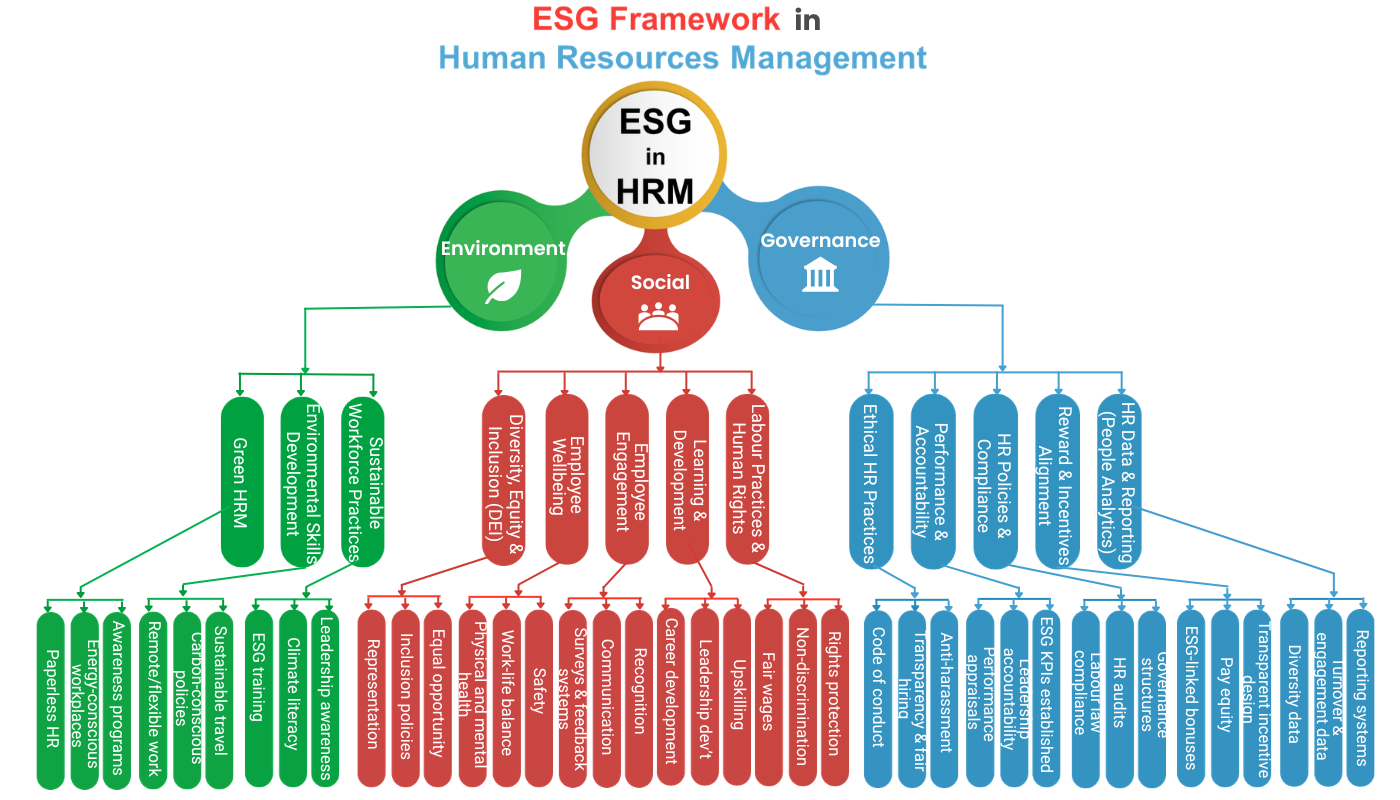
HOW ESG TRANSLATES INTO HR PRACTICE
1. Governance: Systems and Accountability
- Use people analytics to track workforce metrics.
- Ensure pay equity and align rewards with long-term goals.
- Strengthen policies, audits, and compliance systems.
- Embed ESG KPIs into leadership performance.
Shift: From policies to accountability.
2. Social: Workforce as a Strategic Asset
- Enforce fair labour practices and non-discrimination.
- Build continuous engagement systems.
- Align learning with business needs.
- Integrate well-being and safety into operations.
- Deliver measurable DEI outcomes.
Shift: From programmes to performance systems.
3. Environmental: Driving Behaviour Change
- Build ESG awareness across the workforce.
- Promote sustainable work practices.
- Integrate sustainability into HR processes.
- Develop future-ready, green skills.
Shift: From messaging to behaviour.
WHAT THIS MEANS FOR HR LEADERS
ESG requires integration into core HR systems. Performance management should move to continuous tracking with ESG-linked KPIs. Training must become capability-driven. Rewards should emphasise equity and alignment with ESG outcomes. HR data must inform decisions, not just reporting. Policies should function as enforceable governance systems.
A PRACTICAL STARTING POINT
Diagnose current HR systems against ESG dimensions.
Prioritise high-impact areas such as pay equity and leadership accountability.
Embed ESG into recruitment, performance management, rewards, and leadership development.
BOTTOM LINE
ESG in HR is not an add-on. It is a redesign of how organisations manage and measure people. Those that embed it effectively will strengthen performance, reduce risk, and compete better for talent.
